Almond Tree Care - How To Grow And Harvest Almonds
While some copse have fruits and others take berries, the almond tree has seeds. And those edible seeds are covered by a hard shell that is not like shooting fish in a barrel to crack. Merely apart from the seeds or drupes, the tree itself is highly ornamental.
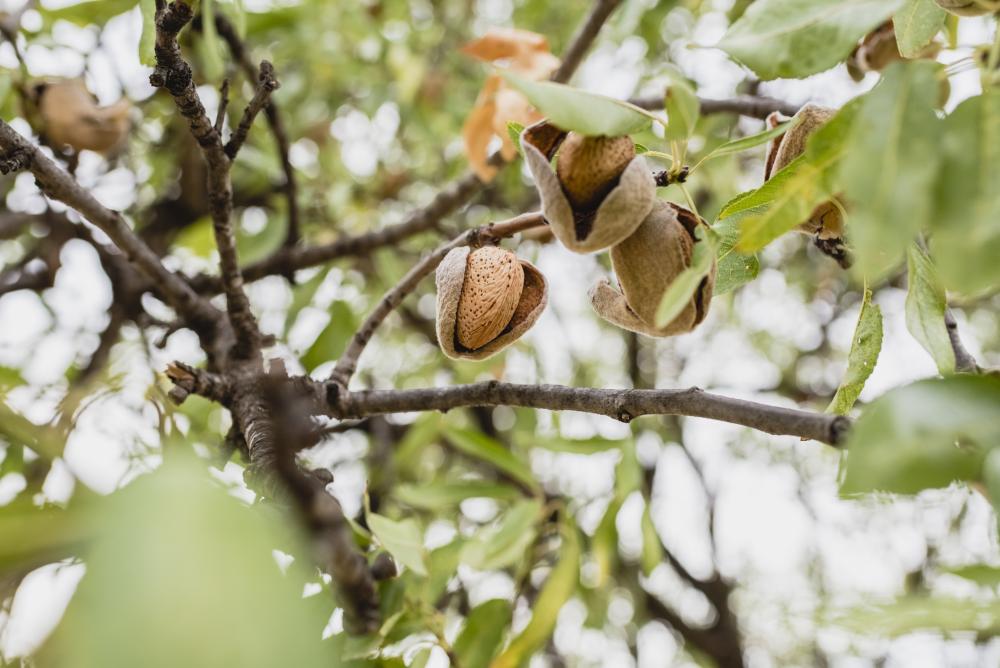
With colorful twigs that change color from green to royal to gray, and dense andlush dark-green leaves the tree offers shade and decoration in a spacious mural. And just similar any other tree, one time the almond tree establishes, information technology very much becomes self-sufficient. You don't have to worry about dedicating much time to care for this hardy tree. Read on to notice out how to grow, care for, and harvest almonds.
All About Almond
A native of Islamic republic of iran and Asia Minor, the almond tree (Prunus dulcis), grows in many parts of the globe. A afar cousin of the peach tree, the almond is a deciduous tree that doesn't grow above 32 feet. That will brand information technology easier for you to prune, treat, and harvest the almonds without the need for a professional.
The slender body of the tree doesn't grow thicker than 12 inches which gives the tree a svelte and elegant look. In the spring the new shoots emerge and they're commonly green. Only sun exposure turns them purple and they shimmer under the sunlight. The green leaves follow and each leaf is virtually v inches long with a serrated border.
Soon after the lush awning has turned greenish and purple, small white flowers open shyly in rows all over the small twigs and branches. Sometimes the flowers will have pink shades depending on the multifariousness. But on average, the blossom doesn't grow about 2 inches in bore.
Although the almond tree grows in zones seven to 9, information technology goes into dormancy after it sheds its leaves and requires betwixt 200 to 700 chill hours during the winter months.
After the flowers are pollinated, the modest drupes develop out of the depth of the female flowers. It will accept the tree 3 years to start flowering and producing fruits. And the fruits themselves need up to 7 to eight months to reach full maturity and become ready to harvest.
The boilerplate almond drupe is about 2.5 inches long and sometimes information technology will have two kernels inside. The seeds of the almond are rich in vitamins and poly peptide.
Almond Varieties
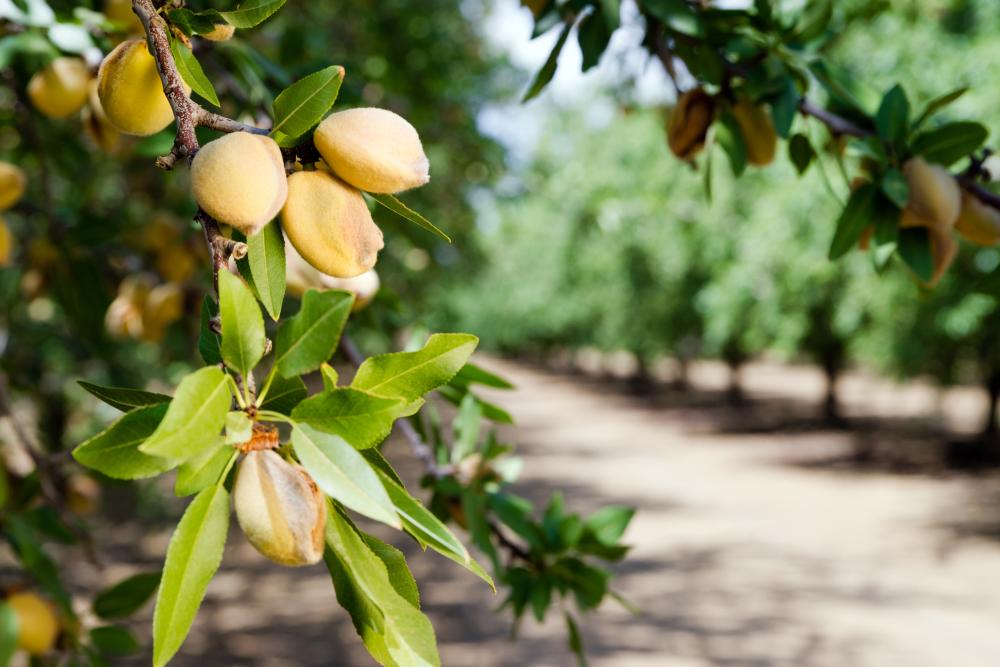
Almonds come in different varieties and over the years only the high yielding cultivars and species have been adopted by commercial growers in California and elsewhere. Here are some of the most popular almond varieties to grow in your garden.
- Carmel: A smallish tree but with high-quality nuts and decent yield. Commercially, this diversity is not very pop due to the tree'southward susceptibility to flower brownish rot which infects almost every second branch. Bud failure is another upshot you have to deal with with this variety.
- Nonpareil: A relatively new cultivar that was first developed in the belatedly 19th century. It was soon embraced with the nascent California almond industry and shortly became the almost widely grown cultivar. Although it only starts to bloom in the late spring or early on summer, information technology's one of the earliest varieties to harvest.
- Sonora: If you prefer a multifariousness that blooms early and has good quality almonds and a good crop, this is the variety for you. The almonds are in the same price range equally Nonpareil. However, you'll demand to have other almond varieties growing nearby to pollinate the Sonora and ensure a high yield.
- Monterey: A late bloomer, this diversity is oft paired with Nonpareil to improve pollination. Information technology'south also a popular choice if you desire to abound almonds commercially since it is a very productive tree. The simply problem is that often the drupes volition have double kernels which reduce their quality.
- Fritz: In an almond orchard, Fritz is often a adept companion to Nonpareil. It blooms a few days later so they tin cross-pollinate without a problem. Only the reason it's not very popular is that in the spring, the tree often gets infected with anthracnose. This often happens as a outcome of rainfall and poor air circulation.
How to Grow Almond
Y'all'll need to beginning the almond tree from seeds. Only not the kind of seeds yous buy at the grocery store. These seeds are roasted and won't germinate. You can order the seeds online or buy them at the local plant nursery. Make sure you live in zones seven to nine to have the correct growing weather condition for this tree.
- Soak the almond drupes in warm h2o overnight to soften the outer shell.
- Examine the seeds the adjacent twenty-four hours for signs of mold. Get rid of any damaged seeds.
- Utilise a nutcracker to cleft the shells open just enough to allow moisture in. If you break the shell, throw it away.
- Prepare small-scale pots for the seeds. Make full the pots with a general-purpose potting mix.
- Plant a seed in each pot about one inch deep and cover information technology with the potting mix. Make sure the cracked side of the shell is facing upwardly.
- H2o the pots to go the potting mix moist and continue it that way until the seeds germinate.
- Place the pots indoors where they get plenty of direct sunlight.
- Once the threat of the last frost is over, prepare a sunny spot in the garden. Till the top 12 inches of the soil.
- Build a small mound about 2 inches high and the same in diameter for each bulb.
- Ease the seedling out of the pot and plant it in the middle of the mound where the soil almost reaches the lower leaves.
- Space the seedlings at least 20 feet apart and brand sure they take plenty space to grow away from any structure or other large trees in the expanse.
Almond Care
Although the almond tree is a hardy blazon that takes care of itself one time it establishes and matures, the showtime iii to four years of the tree's life are usually the most crucial for its success. During this time, the tree will rely on your care and will get most of its water and nutrients from the surface of the soil. Pruning, watering, and feeding are the three tasks you'll accept to do regularly.
Soil
The almond tree needs soil that is loose, well-draining, and rich. If you have either clay or loamy soil, you'll need to amend it with perlite to improve its texture. Before yous plant the seedling in the garden, till the acme one foot of the soil and add nigh fifty percent of perlite to give it the right texture. Check the acerbity of the soil and add together lime to get in slightly acidic. This can have a nifty bear upon on the productivity and the flavors of the almond. Although neutral soil can be good, a degree of acidity tends to improve the growth rate and blossom ratio of the tree.
H2o
Once yous have made certain that the soil is sandy and well-draining you can start watering the seedling as soon as you establish it. The almond tree needs a lot of water on a regular footing. Although the roots are sensitive to waterlogged soil, they can't deal with dry out soil either. So water liberally and flood the soil every time. To ensure you don't forget to water the tree you can use a drip system that keeps the roots well hydrated. During the rainy season, switch off the drip irrigation system and let the rainfall h2o the tree. Cut back on watering when the tree sheds its leaves in the autumn and goes into dormancy during the winter months.
Fertilizer
The faster the almond tree establishes the amend. And to help it achieve maturity and commencement flowering and producing almonds, you lot'll need to fertilize it. Start early in the spring around the time the showtime growth emerges. Apply the fertilizer effectually the drip line and h2o immediately. Avoid spreading the granules of the balanced fertilizer shut to the base of the trunk to protect the roots. Side dress regularly with compost and aged manure. Apply the organic compost in one case a month from the spring until mid-summertime. In the fall and wintertime, the tree barely shows any signs of growth so feeding is not required.
Pruning
If you have seen an almond tree growing in the wild you probably noticed that the awning is anything but uniform. The branches grow every other style without any credible structure. But what's proficient in the wild isn't so in the garden. You'd desire the tree to await its all-time and enrich the mural. And to achieve that y'all'll demand your pruning shears and a ladder. Since the tree is compact in size, it's easy to prune it without the demand for professional help.
Start pruning in the early on winter subsequently all the leaves accept fallen. Cut the branches at the base and if they're thick, employ a saw. Aim for wayward growing branches and those that stick out, intersect with, or cover other branches.
Clear out pathways for the sunlight and airflow to reach the inner depths of the tree. The more sunlight the branches get the more than blooms and fruits the tree bears each year.
Throughout the year, practise light pruning to remove diseased or damaged branches or keep the tree in good shape. Regular pruning improves the productivity of the tree so don't neglect this most of import of all tasks.
Pests and Diseases
Verticillium wilt, crown gall, and bloom brownish rot are the three main diseases that infect the almond tree. Some varieties such equally Fritz are also susceptible to anthracnose then avert planting that variety if the illness is spreading in your expanse.
The other three diseases are mostly a result of overwatering or humid conditions surrounding the tree. Blossom brown rot infects the blooms if the spring is rainy. To gainsay verticillium wilt, graft the almond tree on a robust peach or biting almond rootstock.
Regular pruning improves air circulation around and inside the awning of the tree. Likewise, avoid nicking the trunk of the tree with a garden tool since that leads to crown gall.
Harvesting Almond

Afterwards 3 to 4 years, the almond tree is finally fix to flower and deport almonds. The start year, don't await a large harvest. But the next twelvemonth onwards the tree volition settle into a decent annual harvest. Nigh sweetness almond varieties demand betwixt 6 to viii months earlier the fruits are ripe and fix for picking.
Yous can start harvesting between July and October depending on the diversity yous have planted. Look for signs of ripeness which include dry and cracked pare. When you're prepare to harvest the almonds, spread a large sail under the tree and then have hold of the slim trunk and shake it vigorously.
The ripe almonds start falling on their own. Collect them and put them in a plastic handbag and then proceed them in the freezer for upward to 2 weeks. This volition eliminate any pests lingering on the shells.
Source: https://www.diys.com/almond-tree-care/
0 Response to "Almond Tree Care - How To Grow And Harvest Almonds"
Post a Comment