Lord of the Rings Adventure Card Game Review
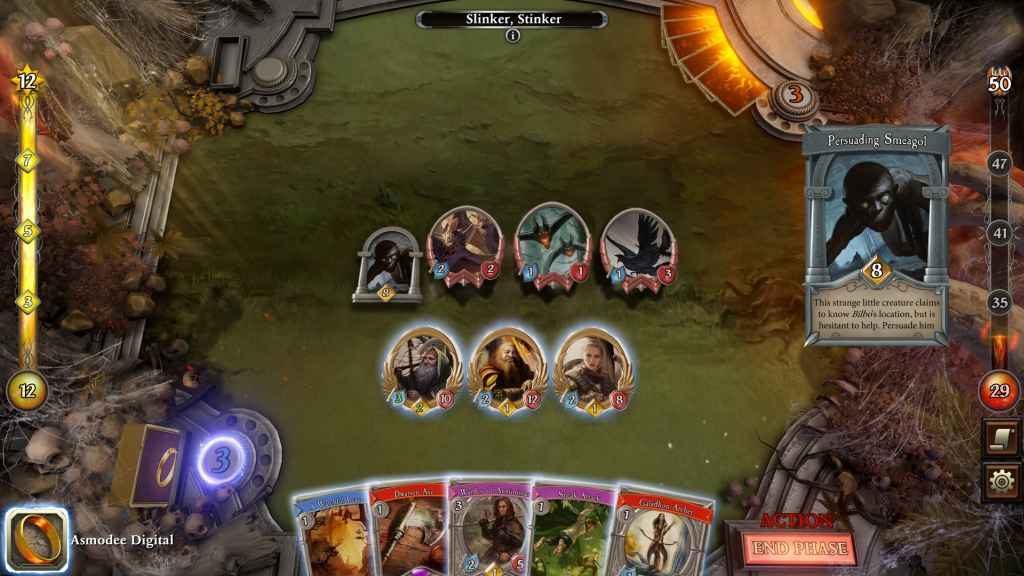
The Lord of the Ring: Adventure Card Game is not what you wait. At first glance, screenshots would give the coincidental observer the idea that LOTR:ACG is a Hearthstone clone. LOTR and Hearthstone share a few mechanics, but in reality the 2 games are so far from each other that I would hesitate to even consider them in the aforementioned genre.
Where Hearthstone (and its numerous clones) are essentially PVP experiences, LOTR is a dedicated PVE game, with no PVP elements at all. While there is indeed multiplayer, The Lord of the Rings: Take a chance Card Game is cooperative, non competitive. The only other player you will be competing against in this game is Sauron – and let me tell you, he is an accented savage.
The Lord Of The Rings: Adventure Card Game PS4 Review
Wow, This Narrative Is Weird!
Instead of pitting you confronting other players, LOTR is much more interested in telling stories – strange Lord of the Rings mash-up tales that purport to accept place between The Hobbit and the Fellowship series.
I'yard not a huge LOTR fan, just like most geeky types, I have a passing knowledge of the story and characters. But it took me a little while of listening to The Lord of the Rings: Take a chance Menu Game's admittedly well-told stories before I realized that I was listening to fan-fiction. Should Bilbo be running effectually the woods fighting spiders and bats with Gimli? Probably non.
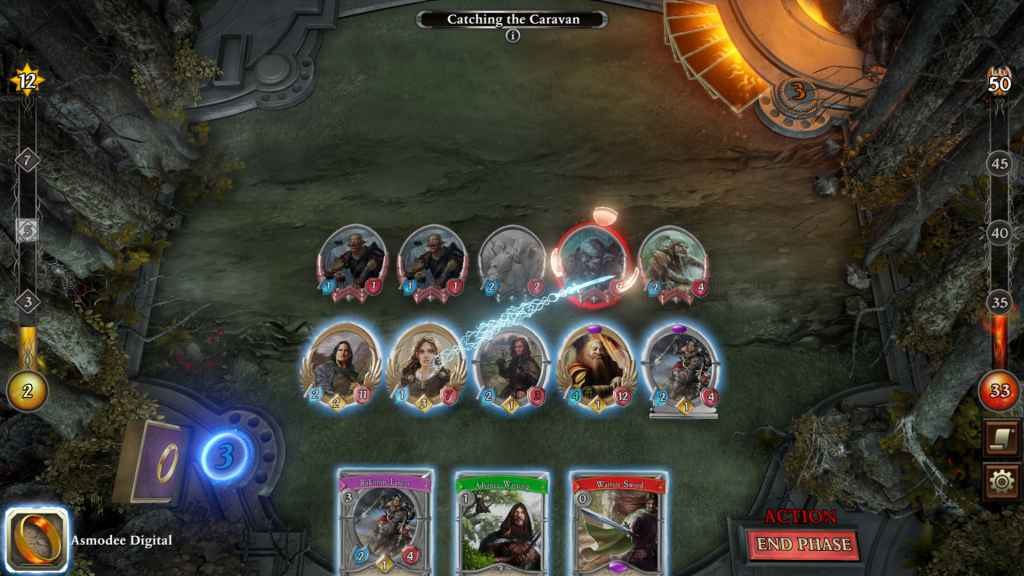
Information technology is interesting that the evolution team at Fantasy Flight Interactive decided on this path, because LOTR fans are notoriously prickly nigh narrative accuracy, and inaccurate narrative is an enormous part of this game. Before each hand, the player is treated to two-three minutes of fully voiced original storytelling. This game talks – a lot. It's non bad, it's just odd.
This story content frankly feels like distilled Tolkien, with the characters and locations all ringing somewhat truthful, but somehow scrambled. Its as though the squad took a couple of Tolkien books, tossed them into a blender, poured the resulting pulp into a tray and baked it. The ingredients are all correct, information technology just feels a piddling off.
Solid Gameplay Mechanics Carry The 24-hour interval
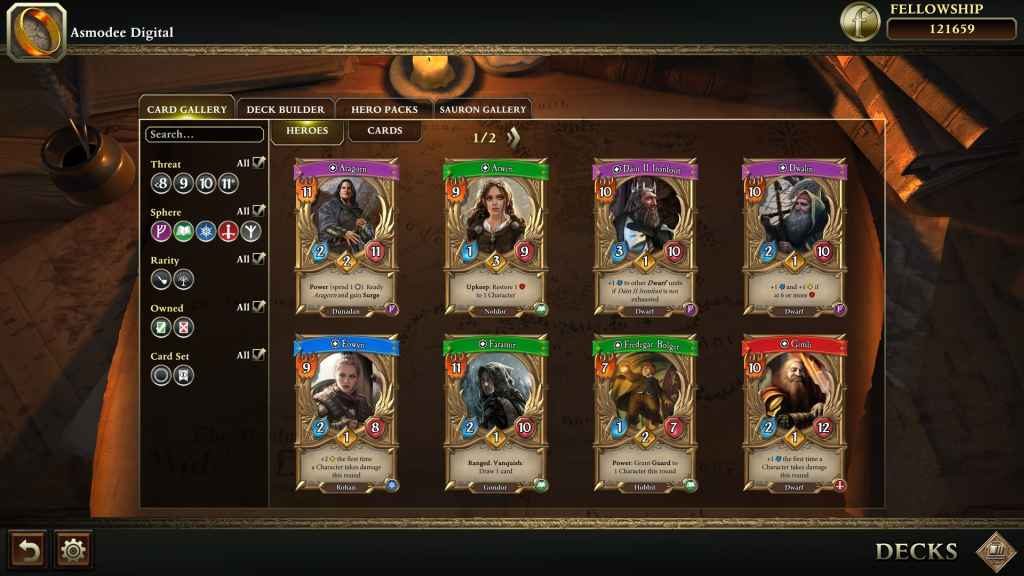
Only setting aside the pervasive narrative weirdness, the core of LOTR:ACG is a pretty solid – though consistently challenging – collectable card game. The thespian'southward decks are based effectually iii powerful "Hero" cards – each of which brings with information technology special abilities.
These three cards are granted to the player at the outset of each quest, giving the actor an immediate advantage. This one heals some other grapheme each turn, that i gains extra attack power when an ally is injured. These cards carry some of the highest stats in the game, so information technology behooves the player to keep them alive. Lose a hero card, and it'due south pretty much game over.
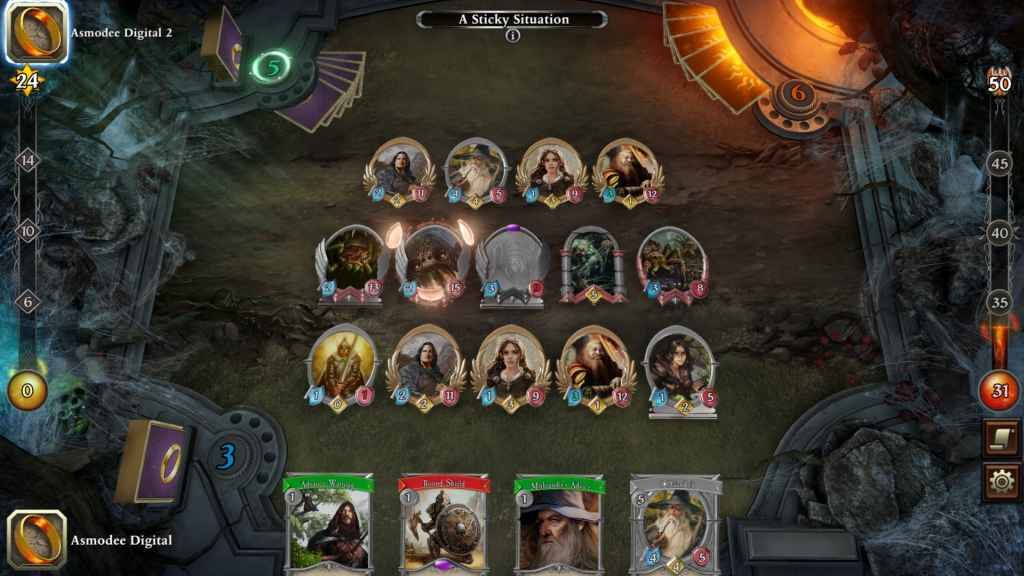
In addition to Hero cards, the histrion also has a number of allies (drones, pawns, any you lot wanna telephone call them) in their deck which stack on the playfield with their heroes. There are also Events – which are akin to spells, played and discarded. Merely my favorite cards are attachments; weapons and armor that tin be attached to a hero or ally to heighten attack or defence force, or grant special powers.
Deck structure is interesting. The heroes are divided into four types – Leadership, Lore, Spirit, and Tactics. When putting your deck together, you lot can simply employ cards that match your hero types. There are as well many cards that require more one hero of the aforementioned type – y'all would need two Spirit heroes to add some of the more powerful heals to your deck, for example.
This dynamic makes for some challenging decisions when constructing a 30-card deck. Do you lot desire a jack-of-all trades deck, or risk a specialized deck that focuses on attacks at the expense of heals or defense?
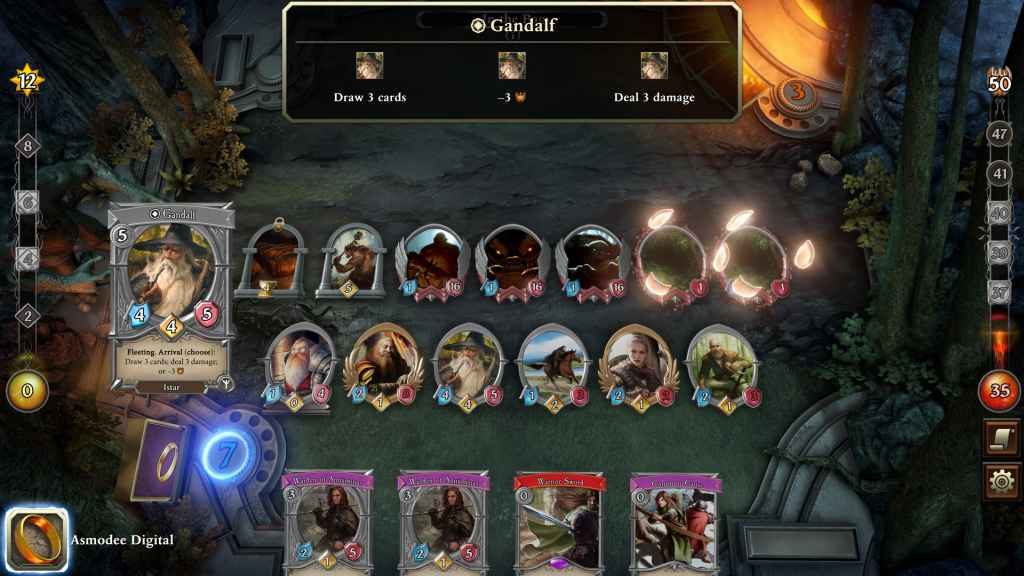
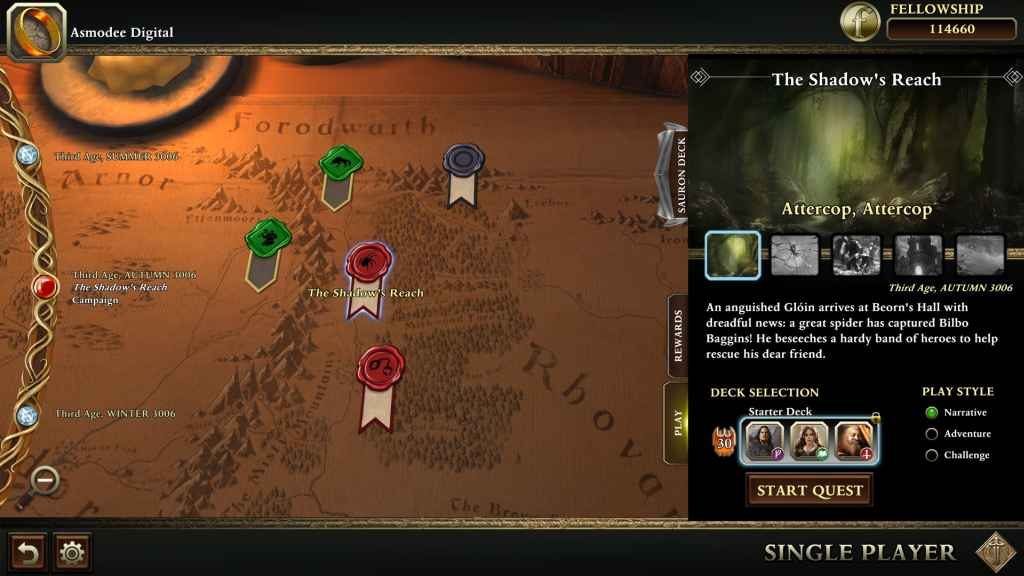
The game plays much like one would expect, with the player alternating turns with Sauron. The content of the game is divided into "quests", with each quest taking identify over around five locations. Finish the objective at one locations, and yous travel to the adjacent.
That ways that your deck must survive v encounters with Sauron, with damage to your heroes and allies carrying over from location to location. Information technology is quite possible to burn out at the first location, moving to the 2d with your heroes near decease and your allies depleted.
Some Frustrations Emerge – But Don't Sink The Feel
I practice non exaggerate when I say that I rarely defeated a quest on my beginning try (later on I completed the robust, merely less challenging tutorial). Information technology ofttimes took me several attempts with different decks to defeat a quest, and I was often stymied at the very last minute past the dang "Threat Meter", existence forced to start the entire quest over once again.
The Threat Meter is a timer of sorts, sitting ominously on the correct of the screen. Equally a quest wears on, the threat against Sauron grows, gaining more than and more than of his attention. At various levels of attention, this meter will grant Sauron a special motility – which tin absolutely wreck your party. And if the Threat Meter makes it all the way to the acme, the player instantly loses. This adds an element of timed tension to the proceedings, simply it also sometimes feels unfair.
To combat the Threat Meter, the player is provided a Fate Meter. In a similar manner, bonuses are granted when the Fate Meter hits sure plateaus. But these bonuses don't feel every bit powerful as the barn-burning prizes Sauron is granted, compounding the frustration.
If you are getting the vibe that I thought this game was pretty tough, you are reading me correctly. Players must stretch their resources to the very limits, leaving their party limping and scraggly by the fourth dimension they (possibly) collapse across the line to victory. This difficulty adds some longevity to the campaign, but it as well feels punishing at times.
Why Practice I Need To Be Online, Exactly?
Also punishing is the fact that The Lord of the Rings: Risk Card Game is an "always online" title. I accept no idea why, merely this game demands that you exist in abiding contact with its servers to function. For a game that requires maybe 45 minutes to run through a quest, this is wildly detrimental. I'thousand the sort of gamer that is constantly interrupted by family unit, and the disability to suspend a single-actor manus and come back to it subsequently is infuriating.
As the multiplayer is limited to co-op (and I wasn't able to detect anyone to play with during my review period), I tin run into no reason why this game couldn't be detached from the servers and enjoyed offline. It's frankly a little bewildering.
But for players willing to put up with the weirdness of slavish online demands and a meandering narrative, there is a mighty decent CCG hiding in here – and one with no microtransactions or money-grubbing tactics to tempt you into paying more than you should. The strategy is LOTR:ACG is solid and challenging. There are tons of mechanics that I didn't affect here for lack of space – simply trust me, this game runs pretty deep.
For those folks that enjoy playing the story modes of other CCGs but shy away from multiplayer, this is a no-brainer. And tactics and strategy fans will find a lot to love here. Only hardcore Lord of the Rings fans should enter with thick skin and blinders, because the "Chance" in "Run a risk Bill of fare Game" is surely going to have them slapping their foreheads in disbelief.
The Lord of the Rings: Run a risk Carte du jour Game is now available on PlayStation 4, Xbox Ane, Nintendo Switch and Steam.
Review code kindly supplied by the publisher.
Source: https://www.psu.com/reviews/the-lord-of-the-rings-adventure-card-game-ps4-review/
0 Response to "Lord of the Rings Adventure Card Game Review"
Post a Comment